

Collins IELTS 2 Academic Reading Test 3
3 passages · 40 questions · 60 minutes
Fragile X Syndrome
[A] A condition that causes children to dislike being hugged and sometimes reject all physical affection is closer to being understood following research into the part of the brain responsible for our senses. Scientists at Northwestern University, Illinois, and the University of Edinburgh explored fragile X syndrome, a condition associated with hypersensitivity to sounds, touch, smells and visual stimuli that can result in social withdrawal or anxiety. Hypersensitivity is a condition in which the person affected responds in an excessive way to contact with the world around them. Some sufferers are even hypersensitive to material on their skin.
[B] The scientists found that critical phases in the brain's development may be wrongly timed in people with the condition. This may result in delayed communication between certain neurons in the brain. By recording electrical signals in the brains of mice, bred to exactly copy the effects of the condition, the researchers found that connections in the brain's sensory cortex were late to develop fully. The study, published in the journal Neuron, found that normal neural connections in the sensory cortex occur much earlier than previously thought: in the first week of pregnancy in mice, which is equivalent to the middle of the second trimester (or fifth month) of pregnancy in humans. In fragile X syndrome, the mistiming also has a domino effect, causing further problems with the correct wiring of the brain. The hope is that by understanding how and when the functions of the brain are affected in fragile X syndrome, a therapy may become possible.
[C] There is a "critical period" during development, when the brain is very plastic and is changing rapidly,' said Anis Contractor, from the Feinberg School of Medicine at Northwestern University. All the elements of this rapid development have to be coordinated so that the brain becomes wired correctly and therefore functions properly. People with the syndrome have cognitive problems as well as sensory problems that make them physically weaker. They have tactile defensiveness, Dr Contractor said. They don't look in people's eyes, they won't hug their parents, and they are hypersensitive to touch and sound. All of this causes anxiety for family and friends as well as for the fragile X patients themselves. Peter Kind, who led the study at the University of Edinburgh, said: 'We know there are key windows during which the brain develops, both in the womb and afterwards. The general principle is that if these time windows have shifted, then that could explain the cognitive problems.'
[D] Professor Kind said that this could be demonstrated by the fact that a child with a cataract (a medical condition in which the lens of the eye becomes less and less transparent) that was not corrected would become permanently blind in the affected eye, whereas an adult would be able to regain their sight after an operation. We've learnt that these changes happen much earlier than previously thought, which gives valuable insight into when we should begin therapeutic intervention for people with these conditions,' he said. It also has implications for the treatment of autism since the changes in the brains of people with fragile X syndrome and autistic people are thought to significantly overlap.' Autism, as many people know, is a disability that affects how a person communicates with and relates to other people, and how they make sense of the world.
[E] Fragile X syndrome is as common as cystic fibrosis, a genetic disorder that commonly affects the lungs and causes breathing difficulties, and that affects about 1 in 4,000 males and 1 in 8,000 females worldwide. The Fragile X Society believes that there are many people who have the fragile X syndrome but have never been diagnosed. It shows up in early infancy and progressively worsens throughout childhood, causing intellectual disability as well as social, language and behavioural problems.
[F] Fragile X syndrome is caused by a gene mutation on the X chromosome - one of the two chromosomes that determine the gender or sex of a person. The mutation interferes in the production of a protein called fragile X mental retardation protein. Fragile X is so-named because the X chromosome appears broken or kinked. Tim Potter, of the Fragile X Society, said: 'We welcome any research that helps us understand fragile X and which may open the way to reversing the effects or preventing them ever happening.'
Questions 1–5
Choose the correct heading for each paragraph from the list of headings below.
List of Headings:
i. How fragile X syndrome was discovered
ii. The genetic basis of fragile X syndrome
iii. Fragile X syndrome and developmental delays in the brain
iv. New treatments for fragile X syndrome
v. The comparative frequency of fragile X syndrome
vi. Research into understanding fragile X syndrome
vii. Reasons for the increase of fragile X syndrome
viii. Other conditions related to cognitive development
ix. Examples of the symptoms of Fragile X syndrome
1. Paragraph A:
2. Paragraph B:
3. Paragraph C:
4. Paragraph D:
5. Paragraph F:
Questions 6–11
Complete the summary of paragraphs A and B below. Choose NO MORE THAN TWO WORDS from the passage for each answer.
6. People with fragile X syndrome are extremely sensitive to sensory …………………………
7. . Some sufferers are even …………………………
8. to clothing. The condition is the result of connections within the …………………………
9. of the brain not being made at the right time. Instead, the …………………………
10. of people with the condition establish connections later than should happen, which is normally in the second …………………………
11. of pregnancy in humans. By understanding how the brain's ………………………… are affected, scientists hope to develop a treatment.
Question 12
Choose the correct letter, A, B or C.
12. Study reveals common bond of children who
A are autistic.
B hate to be hugged.
C have incomplete X chromosomes.
Mutualism
Mutualism is an association between individuals belonging to two different species that benefit each other. There are numerous examples of this: the way flowers rely on insects to pollinate them or even how we humans rely on bacteria within our digestive system to break down our food.
One of the most visible forms of mutualism can be found in the pampas grasslands of Argentina, where organisms belonging to two different species work together not only to benefit each other but also to change the ecosystem around them. Grasscutter ants have been instrumental in shaping the landscape of the pampas grasslands - in fact, the landscape has been created almost entirely by the ants. Although they are only 1.5 cm long, they are one of the few creatures capable of shaping their own environment and one of the few living creatures apart from humans that cultivate their own food. The ants harvest the grasslands to supply their colony with grass. Each year over 0.5 tonnes of grass are harvested by a single colony. However, grass consists largely of cellulose, which the ants cannot digest, so the ants have developed a mutualistic relationship with an organism that can digest it. Deep inside the ant nests is a fungus that is able to grow on the compost produced by the grass. The fungus is unique to the habitat inside the ants' nest and it produces edible gardens for the ants. The relationship is so successful that a single colony can consist of up to eight million ants.
One of the reasons for the ants' success is the sophistication of their social organisation: they are all members of a single society but there is a division of labour within it. There are three main castes: the queen, the soldiers (or majors) and the worker ants. The worker ants are further divided into categories: the minims (the smallest ants), the minors and the mediae, each with different duties. The soldier ants defend the colony against physical threats. They also clear the paths for the other workers. The mediae are the foraging ants that look for grass to cut up and take back to the nest. Once the grass has been harvested, the forager ants carry it to the nest by following a chemical trail. But often they are not alone: minims ride on them or on the grass in order to protect them from a particular species of fly that parasitises the foragers. As soon as the grass leaves arrive at the nest, the forager ants pass them to smaller gardener ants, which cut up the leaves into smaller and smaller pieces until they are small enough to feed to the fungus. They then pass the tiny pieces on to the smallest ants, which feed the grass to the fungus and tend the fungal gardens.
A very important function of the smallest ants is to keep the fungus healthy. They do this by carefully inspecting each piece of grass leaf and making sure that it is free from other fungi or pests. In fact, the mutualistic relationship is supplemented by bacteria that live on the ants and give out chemicals that kill microbes harmful to the fungus. The relationship between the fungus and the ants is so developed that the grasscutter ants are sensitive to the fungus's reaction to different plants; if a particular plant is poisonous to the fungus, the ants no longer collect it. Waste disposal is another serious concern. Waste is collected by waste-disposer ants, which tend to be the older ants, thus ensuring that the younger ones can tend to other work. The waste-disposer ants remove waste (including dead ants) from the nest and take it underground into the deepest tunnels, where they aid its decomposition by moving it around.
Because the fungus at the heart of the colony nest is a living and breathing organism, it produces carbon dioxide - a very toxic gas. The ant nest is a masterpiece of construction, carefully made to keep air circulating in order to prevent suffocation through the build-up of carbon dioxide. The nest has two methods of air circulation. Firstly, the hot air produced by the fungal gardens at the centre of the nest flows up through a central tunnel and draws in cooler, cleaner air from the outside passages. The second method involves a series of towers at the top of the nest. When the wind blows over the towers, it draws out old air and fresh air rushes into the nest from nest holes that extend outwards from the main nest. A nest can measure up to 30 metres across, and other mounds extend away from the central nest for up to 80 metres. As the nest also dominates the underground world, often extending seven metres down, the rapid flow of air through the nest is essential to the health of the inhabitants and their garden.
Questions 13–19
Do the following statements agree with the information given in Reading Passage 2?
TRUEif the statement agrees with the information
FALSEif the statement contradicts the information
NOT GIVENif there is no information on this
13. Grasscutter ants are one of a small group of creatures that use other organisms to produce food.
14. The fungus that grows in the nests of grasscutter ants is not found in any other kind of environment.
15. Grasscutter ants cut the grass into very small pieces so they can eat it.
16. Forager ants are the smallest ants.
17. Grasscutter ants can carry loads much heavier than their body weight.
18. The ants never collect plants that might harm the fungus.
19. The older ants are responsible for getting rid of waste.
Questions 20–23
Classify the following as typical of A. majors, B. mediae, or C. minims.
Categories
A majors
B mediae
C minims
20. take grass back to the colony
21. protect the colony from invaders
22. make sure the way to the food is clear
23. farm the fungus
Questions 24–26
Label the diagram below.
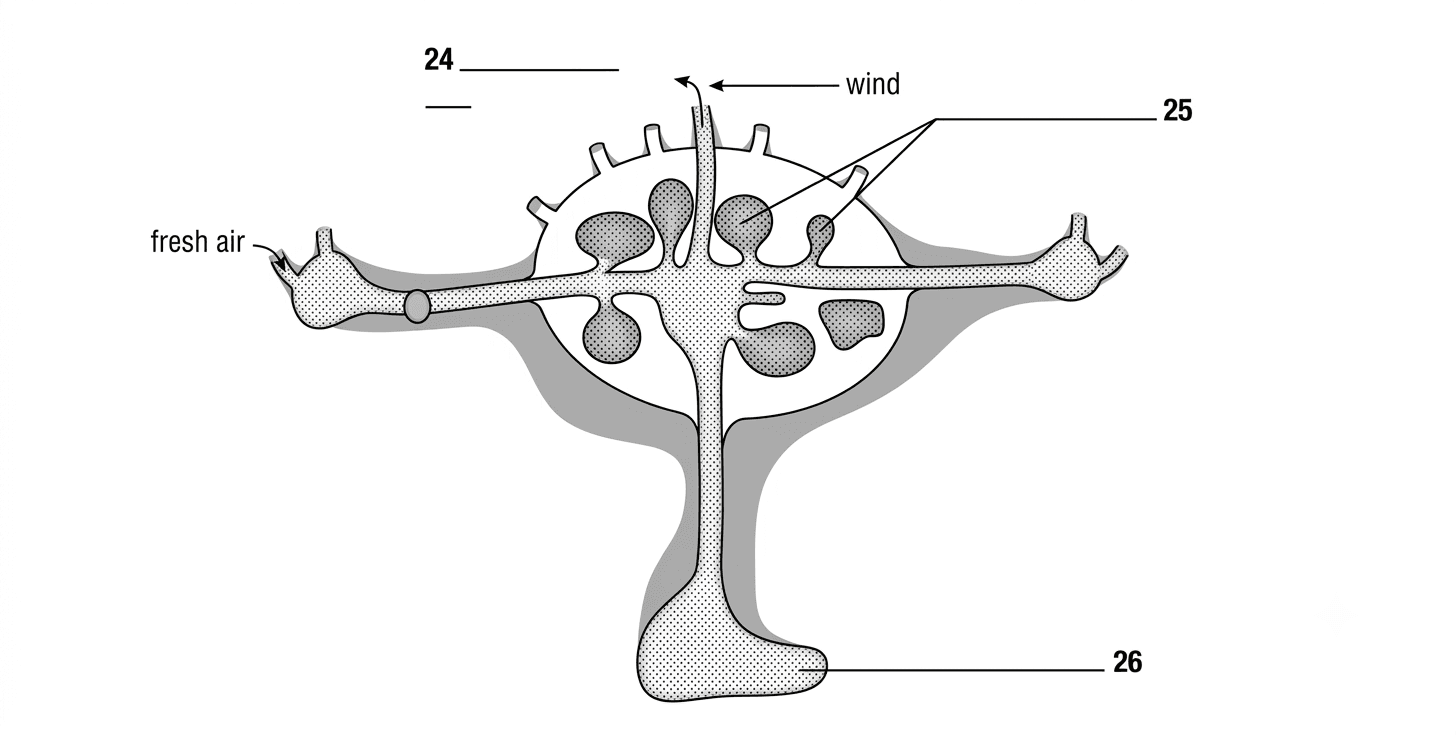
24. Label the diagram below by dragging the correct word or phrase from the box onto each gap.
A fungal gardens
B waste tunnel
C carbon dioxide
25. Label the diagram below by dragging the correct word or phrase from the box onto each gap.
A fungal gardens
B waste tunnel
C carbon dioxide
26. Label the diagram below by dragging the correct word or phrase from the box onto each gap.
A fungal gardens
B waste tunnel
C carbon dioxide
Brain Plasticity
Is it really true that human adults are less able to learn as they grow older? Traditionally, the brain was thought to be 'completed' at the latest by the start of adulthood. During adulthood the brain was viewed as relatively stable until at last the aging brain started to decline. We have around 86 billion neurons at birth, and that's it. Or is it? Until two decades ago, it was thought that new neurons - the cells that carry messages between the brain and other parts of the body - did not grow in adults. Moreover, it was believed that functions in the brain were fixed or localised in distinct areas, one common assumption being that language functions resided solely in the left hemisphere of the brain. The functions were fixed in childhood and did not change.
But this is not strictly true. Research has shown that adult brains are not fixed, and nor are they degenerating or dying as we grow older. In fact, the opposite seems to be the case: neurons are dying and being regenerated all the time and new experiences create new connections between neurons. Furthermore, when the brain suffers damage, it has the ability to shift brain functions to other parts of the brain.
The first evidence that refuted the idea that the brain was a stable organ was produced over 30 years ago. Fernando Nottebohm's study of male songbirds at The Rockefeller University showed that new neurons would grow when a bird learnt a new song. And more recently, evidence from studies done at Wayne State University has shown that physical exercise or lack of it is a factor in remodelling the brain. Two regions of the brain are capable of producing new neurons: the hippocampus and the olfactory cortex. In particular, the hippocampus is extremely important in turning short-term memories into long-term memories. It appears that new neurons regularly grow and move into the hippocampus. Conversely, the loss of brain tissue, most often associated with brain damage or illness can also have a positive function. We know that most of the neurons that die off in children and adults are the ones that are not effective or are not needed. In short, the brain needs to operate at maximum efficiency and neurons which become unused are discarded. So, far from being a stable organ, the brain is constantly changing, losing what is not needed and developing what is needed.
A landmark study by neuroscientist Dr Eleanor Maguire and her colleagues at University College, London confirmed findings from other studies which reveal that when humans spend time repeating a particular skill, the area of the brain associated with that skill becomes better developed. For four years, Dr Maguire and her team followed a group of 79 London taxi drivers who shared certain characteristics including age, gender and education. They used magnetic resonance imaging (MRI) to map changes to their posterior hippocampi. The hippocampus plays a major role in short-term memory and spatial navigation, both of which are very important to the work of taxi drivers, and London taxi drivers in particular. To become a taxi driver in London, you need to learn 'the Knowledge' - a detailed understanding of the streets in central London as well as tourist spots and other places of interest. Gaining 'the Knowledge' takes on average three to four years, at the end of which taxi drivers have to take a test that only fifty per cent of candidates pass.
At the start of the study, the taxi drivers had similar sized hippocampi but after four years of intensive spatial and memory training, Dr Maguire found that the taxi drivers who successfully passed their tests had more developed hippocampi than those who failed. This was confirmed by a series of memory tests and MRI images which showed that certain parts of their brains had developed over time. Furthermore, other experimental studies over the last few decades have shown that the adult brain can change its structure and function massively. In a 1982 study carried out by Jon Kaas at Vanderbilt University, changes in brain patterns were noted in people whose limbs had been amputated or who suffered nerve damage. Since then, it has become clear that the living brain is constantly changing depending on external experiences. As Boston University neurobiologist Howard Eichenbaum (commenting on Dr Maguire's research) stated: '... you can produce profound changes in the brain with training. That's a big deal.'
Questions 27–32
Complete the sentences below. Choose NO MORE THAN THREE WORDS or A NUMBER from the passage for each answer.
27. Humans are born with about ………………………… neurons.
28. It used to be believed that neurons ………………………… in humans after a certain age.
29. If the brain is damaged, it can ………………………… to other areas within the brain.
30. The hippocampus, which plays a role in creating ………………………… from short-term memories, has been identified as being one of the parts of the brain that can grow neurons.
31. The hippocampus also plays an important part in ………………………… - a key skill for taxi drivers in London.
32. Taxi drivers who successfully passed 'the Knowledge' had ………………………… hippocampi than those who did not pass.
Questions 33–36
Look at the people and institutions below and match each with the correct finding, A-G. Note: there are three more findings than you will need.
Findings
A The hippocampus stores memories.
B Song birds grew neurons when they learnt a new song.
C The olfactory cortex is capable of growing new cells.
D Being active changes the brain.
E The brain is constantly changing its function and structure.
F Training for a test enlarged a part of the brain in some people.
G Brain patterns changed when a person's arms or legs were cut off.
33. Fernando Nottebohm, The Rockefeller University
34. Jon Kaas, Vanderbilt University
35. Eleanor Maguire, University College, London
36. Wayne State University
Questions 37–40
Do the following statements agree with the information given in Reading Passage 3?
TRUEif the statement agrees with the information
FALSEif the statement contradicts the information
NOT GIVENif there is no information on this
37. When you do something over and over again, the part of the brain controlling the skill grows.
38. 'The Knowledge' helps taxi drivers to take people to places in the shortest time.
39. Dr Maguire's study was conducted on people with similar characteristics.
40. Dr Maguire relied mainly on intelligence tests in her research.
Answers
1. vi
2. iii
3. ix
4. viii
5. ii
6. stimuli
7. hypersensitive
8. sensory cortex
9. neurons
10. trimester
11. functions
12. hate to be hugged.
13. True
14. True
15. False
16. False
17. Not Given
18. True
19. True
20. B
21. A
22. A
23. C
24. carbon dioxide
25. fungal gardens
26. waste tunnel
27. 86 billion
28. did not grow
29. shift brain functions
30. long-term memories
31. spatial navigation
32. more developed
33. B
34. G
35. F
36. D
37. True
38. Not Given
39. True
40. False
Explanations
- 1. vi
- Paragraph A introduces fragile X syndrome, describes its symptoms, and states that scientists at two universities are researching it. Paraphrase: 'This paragraph presents the condition and mentions ongoing scientific investigation.' Distractor analysis: ix (Examples of symptoms) is too narrow — symptoms are mentioned but the main focus is the research itself; i (How it was discovered) is not mentioned at all.Common trap: Partial-information trap — a narrower distractor heading (ix) describes only a supporting detail, not the paragraph's overall focus.
- 2. iii
- Paragraph B explains that critical phases in brain development are mistimed, causing delayed connections in the sensory cortex, with a domino effect on brain wiring. Paraphrase: 'The condition is linked to problems with the timing of brain development.' Distractor analysis: vi (Research) describes the study as a whole, but this specific paragraph's content is about developmental delays; ix (Symptoms) is not the focus here.Common trap: Topic-recurrence trap — vi also relates to the overall research project, but B specifically covers the developmental-timing finding.
- 3. ix
- Paragraph C gives specific behavioural symptoms: not looking in people's eyes, not hugging parents, hypersensitivity to touch and sound. Paraphrase: 'This section lists the observable difficulties faced by sufferers.' Distractor analysis: vii (Reasons for increase) is never mentioned; iii (Developmental delays) is paragraph B's focus, not C's.Common trap: Topic-recurrence trap — iii also relates to the condition's biology, but C specifically lists observable symptoms.
- 4. viii
- Paragraph D discusses how the research has implications for autism, since the brain changes in fragile X and autism overlap significantly. Paraphrase: 'This research also informs our understanding of a related condition, autism.' Distractor analysis: iv (New treatments) — potential therapy is mentioned briefly, but the paragraph's main point is the link to autism, not treatment details; i (Discovery) is not discussed.Common trap: Partial-information trap — a narrower distractor heading (iv) covers only a brief mention, not the paragraph's main point.
- 5. ii
- Paragraph F explains that fragile X is caused by a gene mutation on the X chromosome, which affects protein production, and explains the origin of the condition's name. Paraphrase: 'This paragraph covers the genetic cause of the condition.' Distractor analysis: v (Comparative frequency) describes paragraph E, not F; i (Discovery) is not discussed here.Common trap: None significant — the answer is directly supported by unique content.
- 6. stimuli
- The passage says the condition is associated with hypersensitivity to sounds, touch, smells and visual stimuli. Paraphrase: 'They overreact to things they see, hear, smell and feel.' Distractor analysis: 'input' is a plausible synonym, but the exact word used is 'stimuli'.Common trap: Synonym trap — a near-synonym is tempting but not the exact passage word.
- 7. hypersensitive
- The passage states that some sufferers are hypersensitive to material on their skin, including clothing. Paraphrase: 'They can be overly sensitive even to fabric touching their skin.' Distractor analysis: 'sensitive' alone is a weaker synonym, but the exact word used is 'hypersensitive'.Common trap: Synonym trap — a weaker near-synonym is tempting but not the exact passage word.
- 8. sensory cortex
- The researchers found that connections in the brain's sensory cortex were late to develop fully. Paraphrase: 'The sensory cortex area fails to form connections on schedule.' Distractor analysis: 'cortex' alone is not enough; the exact phrase required is 'sensory cortex'.Common trap: Incomplete-phrase trap — the single word 'cortex' is tempting but the full two-word phrase is required.
- 9. neurons
- The delayed communication described is specifically between certain neurons in the brain. Paraphrase: 'The nerve cells take longer than normal to connect.' Distractor analysis: 'cells' is a broader synonym, but the exact word used is 'neurons'.Common trap: Synonym trap — a broader synonym is tempting but not the exact passage word.
- 10. trimester
- The normal timing of neural connections is equivalent to the middle of the second trimester in human pregnancy. Paraphrase: 'This stage corresponds to the fifth month of pregnancy.' Distractor analysis: 'month' is mentioned as a clarifying equivalent, but the exact word required for this blank is 'trimester'.Common trap: Alternative-unit trap — 'month' is given as a clarifying equivalent nearby, but the required word is 'trimester'.
- 11. functions
- The hope is that by understanding how and when brain functions are affected, therapy may become possible. Paraphrase: 'Knowing which brain operations are disrupted could lead to a cure.' Distractor analysis: 'processes' is a plausible synonym, but the exact word used is 'functions'.Common trap: Synonym trap — a near-synonym is tempting but not the exact passage word.
- 12. hate to be hugged.
- The passage opens by describing a condition that causes children to dislike being hugged and reject physical affection. Paraphrase: 'The research focuses on children who are averse to touch and hugs.'Common trap: Fabricated-detail trap — option C misrepresents the chromosome description ('broken or kinked') as being literally incomplete.
- 13. True
- The passage states they are one of the few creatures, apart from humans, that cultivate their own food (using the fungus). Paraphrase: 'They are among the rare animals that farm another organism for food.' Distractor analysis: False would contradict this; Not Given would apply if not mentioned, but it is stated explicitly.Common trap: None significant — the answer is directly stated.
- 14. True
- The passage says the fungus is unique to the habitat inside the ants' nest. Paraphrase: 'This fungus lives only inside the ants' nests.' Distractor analysis: False would contradict the 'unique' statement; Not Given would apply if not mentioned, but it is stated directly.Common trap: None significant — the answer is directly stated.
- 15. False
- The ants cannot digest grass; they cut it up to feed to the fungus, not to eat it themselves. Paraphrase: 'They process the grass for the fungus, not for their own consumption.' Distractor analysis: True would ignore the digestion fact stated explicitly; Not Given would apply if this weren't mentioned.Common trap: Purpose-substitution trap — the statement swaps the true purpose (feeding the fungus) for a plausible but false one (eating it themselves).
- 16. False
- The minims are explicitly identified as the smallest ants; the mediae (foragers) are a separate category. Paraphrase: 'The foragers are not the tiniest ants; the minims hold that title.' Distractor analysis: True would misidentify which category is smallest, contradicting the passage's explicit labelling.Common trap: Category-confusion trap — the statement conflates the forager category (mediae) with the smallest-ant category (minims).
- 17. Not Given
- The passage mentions minims riding on foragers or on the grass being carried, but it never states anything about the ants' carrying capacity relative to their own body weight. Paraphrase: 'The text does not provide any information about a load-to-weight ratio.' Distractor analysis: True would require an explicit statement about weight capacity; False would require the passage to deny it — neither happens.Common trap: Not Given trap — a plausible-sounding fact about ant strength is never actually stated.
- 18. True
- The ants are sensitive to the fungus's reaction and stop collecting plants that are poisonous to it. Paraphrase: 'They avoid any plant that could damage the fungus.' Distractor analysis: False would contradict this direct statement; Not Given would apply if not mentioned, but it is described clearly.Common trap: None significant — the answer is directly stated.
- 19. True
- Waste is collected by waste-disposer ants, which tend to be the older ants. Paraphrase: 'Elder ants handle waste removal.' Distractor analysis: False would contradict this direct statement; Not Given would apply if not mentioned, but it is stated explicitly.Common trap: None significant — the answer is directly stated.
- 20. B
- The mediae are the foraging ants that cut grass and carry it back to the nest. Paraphrase: 'The foragers bring the grass to the nest.' Distractor analysis: majors (A) are soldiers; minims (C) tend the fungus, not transport the grass.Common trap: None significant — the answer is directly stated.
- 21. A
- Soldier ants (majors) defend the colony against physical threats. Paraphrase: 'The majors are the defenders of the nest.' Distractor analysis: mediae (B) are foragers; minims (C) tend the fungus.Common trap: None significant — the answer is directly stated.
- 22. A
- Soldier ants also clear the paths for the other workers. Paraphrase: 'They remove obstacles from the routes used by foragers.' Distractor analysis: mediae (B) are foragers who use the cleared paths, not the ones clearing them.Common trap: Role-confusion trap — the mediae travel the cleared paths, but it is the majors who clear them.
- 23. C
- The smallest ants (minims) feed the grass to the fungus and tend the fungal gardens. Paraphrase: 'The tiniest workers care for the fungus.' Distractor analysis: majors (A) are soldiers; mediae (B) are foragers, not the ones tending the fungus directly.Common trap: None significant — the answer is directly stated.
- 24. carbon dioxide
- The blank at the top of the nest marks the gas escaping through the vent shaft into the wind. The passage explains this gas is produced by the living fungus and must be circulated out. Paraphrase: 'The toxic gas produced by the fungus is vented out through this shaft.' Distractor analysis: 'fungal gardens' is the source of the gas, not the gas itself; 'waste tunnel' is a different structure at the bottom of the nest.Common trap: Role-confusion trap — several word-box entries describe plausible but different parts of the nest's structure.
- 25. fungal gardens
- The blank points to the shaded chambers at the centre of the nest that produce hot air, which the passage identifies as the fungal gardens. Paraphrase: 'The heat source driving air circulation is the fungus garden at the nest's core.' Distractor analysis: 'carbon dioxide' is the gas the fungal gardens produce, not the gardens themselves; 'waste tunnel' is a separate structure.Common trap: Role-confusion trap — several word-box entries describe plausible but different parts of the nest's structure.
- 26. waste tunnel
- The blank points to the deepest chamber at the bottom of the nest, where waste-disposer ants take unwanted material for decomposition. Paraphrase: 'This lowest passage is used to carry waste away and break it down.' Distractor analysis: 'fungal gardens' is where food grows, not where waste is disposed of; 'carbon dioxide' is a gas, not a physical tunnel.Common trap: Role-confusion trap — several word-box entries describe plausible but different parts of the nest's structure.
- 27. 86 billion
- The passage states that we have around 86 billion neurons at birth. Paraphrase: 'The number of nerve cells at birth is approximately 86,000,000,000.' Distractor analysis: '86' alone is incomplete; the full figure required is '86 billion'.Common trap: Incomplete-number trap — the bare number alone is tempting but the unit ('billion') is required.
- 28. did not grow
- Until recently, it was thought that new neurons did not grow in adults. Paraphrase: 'Previously, scientists believed nerve cells stopped increasing after childhood.' Distractor analysis: 'stopped growing' is a plausible paraphrase, but the exact phrase used in the passage is 'did not grow'.Common trap: Synonym trap — a plausible paraphrase is tempting but not the exact passage wording.
- 29. shift brain functions
- The passage states that when the brain suffers damage, it has the ability to shift brain functions to other parts of the brain. Paraphrase: 'It can move tasks to undamaged regions.' Distractor analysis: 'shift' alone omits what is being shifted; the full three-word phrase required is 'shift brain functions'.Common trap: Incomplete-phrase trap — the verb alone ('shift') is tempting but the full phrase including its object is required.
- 30. long-term memories
- The hippocampus is crucial for converting short-term memories into long-term ones. Paraphrase: 'It turns temporary memories into permanent ones.' Distractor analysis: 'memories' alone is too vague; the exact phrase required is 'long-term memories'.Common trap: Incomplete-phrase trap — the bare noun 'memories' is tempting but the qualifying adjective 'long-term' is required.
- 31. spatial navigation
- The hippocampus is involved in spatial navigation, which is heavily used by taxi drivers. Paraphrase: 'It helps with finding your way around, essential for cabbies.' Distractor analysis: 'navigation' alone omits the qualifying word; the exact phrase used is 'spatial navigation'.Common trap: Incomplete-phrase trap — the bare noun 'navigation' is tempting but the qualifying adjective 'spatial' is required.
- 32. more developed
- Successful drivers had more developed hippocampus than those who failed. Paraphrase: 'Passers had a better-developed hippocampus.' Distractor analysis: 'larger' is implied by the finding but is not the exact phrase used; the passage says 'more developed'.Common trap: Synonym trap — 'larger' is a plausible inference but not the exact passage wording.
- 33. B
- Nottebohm's study showed that new neurons grew in songbirds when they learned a new song. Paraphrase: 'His research proved that learning a new song generated new nerve cells in birds.' Distractor analysis: the other findings belong to different researchers or institutions named elsewhere in the passage.Common trap: None significant — the answer is directly stated.
- 34. G
- Kaas's 1982 study found brain pattern changes in people whose limbs had been amputated or who had nerve damage. Paraphrase: 'His work revealed that losing a limb alters brain organisation.' Distractor analysis: the other findings belong to different researchers or institutions.Common trap: None significant — the answer is directly stated.
- 35. F
- Maguire's study showed that taxi drivers who passed 'the Knowledge' had a more developed hippocampus after their training. Paraphrase: 'Intensive study for an exam led to brain growth in successful candidates.' Distractor analysis: the other findings belong to different researchers or institutions.Common trap: None significant — the answer is directly stated.
- 36. D
- Studies at Wayne State University showed that physical exercise, or the lack of it, is a factor in remodelling the brain. Paraphrase: 'Their research indicated that activity level affects brain structure.' Distractor analysis: the other findings belong to different researchers or institutions.Common trap: None significant — the answer is directly stated.
- 37. True
- The passage states that when humans spend time repeating a particular skill, the area of the brain associated with that skill becomes better developed. Paraphrase: 'Practice makes the relevant brain region larger.' Distractor analysis: False would contradict this directly; Not Given would apply if not mentioned, but it is the central finding described.Common trap: None significant — the answer is directly stated.
- 38. Not Given
- The passage explains that 'the Knowledge' is a detailed understanding of the streets in central London as well as tourist spots and places of interest, but it never mentions taking people to places in the shortest time. Paraphrase: 'The text describes what 'the Knowledge' is, but does not say it minimises journey time.' Distractor analysis: True would require a statement about time efficiency; False would require the passage to deny this — neither happens.Common trap: Not Given trap — a plausible-sounding benefit (shortest routes) is never actually stated.
- 39. True
- The study followed taxi drivers who shared certain characteristics including age, gender and education. Paraphrase: 'The participants were alike in several demographic ways.' Distractor analysis: False would contradict this directly; Not Given would apply if not mentioned, but it is stated explicitly.Common trap: None significant — the answer is directly stated.
- 40. False
- Maguire used magnetic resonance imaging (MRI) and memory tests, not intelligence tests. Paraphrase: 'Her methods were brain scans and memory assessments, not IQ tests.' Distractor analysis: True would require the passage to mention intelligence tests, which it never does; her actual methods (MRI, memory tests) are explicitly named instead.Common trap: Fabricated-method trap — 'intelligence tests' is a plausible-sounding method never actually used or mentioned.
Comments
Loading comments…